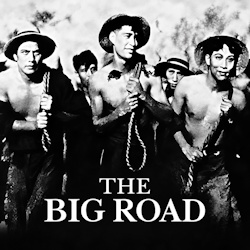
THE BIG ROAD – Er Nie, Guang Ren
 GREATEST SCORES OF THE TWENTIETH CENTURY
Original Review by Craig Lysy
Following the completion of the woman’s sports film Ti Yu Huang Hou in 1934, director Sun Yu decided that he wanted to contribute to the “National Defense Cinema” movement with a film, which showcased cinema stars actress Li Lili and actor Jin Yan. He conceived using the metaphor of ordinary citizens building a military highway to symbolize collective resistance against imperialist invaders. Challenges arose because the Nationalist Kuomintang government enforced strict censorship policies to avoid directly provoking Japan. As such Sun Yu cleverly substituted explicit references to Japan with generalized patriotic struggles of “weak nations” against an unnamed enemy. He secured funding from Lianhua Film Company, Lu Jie and Lo Ming Yau would oversee production, and Sun Yu would direct and write the screenplay. A stellar cast was assembled led by Jin Yan as Brother Jin, Li Lili as Jasmine, joined by Luo Peng as Little Luo, Zheng Junli as Zheng Jun, Chen Yen-Yen as Ding Xiang (Orchid) and Han Langen as Little Six. Read more…
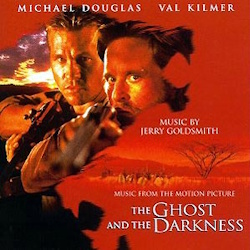
THE GHOST AND THE DARKNESS – Jerry Goldsmith
 THROWBACK THIRTY
Original Review by Jonathan Broxton
The Ghost and the Darkness is a historical adventure film directed by Stephen Hopkins and written by William Goldman. The film is set during the construction of a railway bridge in Tsavo, Kenya, in 1898, amid the Scramble for Africa, when a number of European powers colonized the continent. Val Kilmer stars as Irish engineer John Patterson, who arrives in Kenya determined to finish the job, only to find his workers terrorized by two man-eating lions. Michael Douglas plays Charles Remington, the experienced hunter brought in to help Patterson stop them. John Kani appears as Samuel, Patterson’s trusted colleague, while Tom Wilkinson plays the railway official Beaumont. Hopkins, whose earlier films included Predator 2 and Blown Away, turns the attacks into a mixture of old-fashioned adventure and creature-feature suspense. Read more…
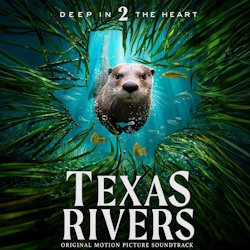
DEEP IN THE HEART 2: TEXAS RIVERS – Noah Sorota
 Original Review by Jonathan Broxton
Last year I wrote a review of the score for the nature documentary The American Southwest, composed by Noah Sorota. I described it as “awash in gorgeous melodic passages, expressive instrumental colors, and deep emotional content,” noted that it was “a series of interconnected vignettes that tell the stories of the creatures that inhabit a spectacular natural location,” and described the music as “sweeping and exhilarating, sometimes thoughtful, sometimes amusing and quirky, and sometimes darkly dynamic, but always captivating, engaging, and hugely enjoyable.” I could almost write the same review for Deep in the Heart 2: Texas Rivers, another feature documentary with music by Sorota that absolutely knocked my socks off. Read more…
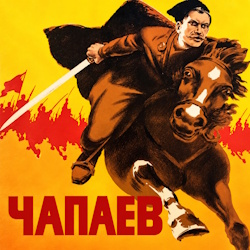
CHAPAEV – Gavriil Popov
 GREATEST SCORES OF THE TWENTIETH CENTURY
Original Review by Craig Lysy
Chapaev was commissioned by the Chief Directorate of the Film and Photo Industry as a propaganda tool to establish a relatable, mythological hero to champion the working class. In the early 1930s, the Soviet government was heavily promoting Socialist Realism, an artistic mandate, that required art to reflect both the realities and the ideological goals of the Communist state. As such, they created a unifying, accessible “people’s hero” in the person of Vasily Chapayev, a charismatic, self-educated peasant commander, who fought valiantly for the Red Army against the loyalist Whites during the Russian Civil War. Lenfilm would manage production, Georgi Vasilyev and Sergei Vasilyev would co-direct, and write the screenplay based on the 1923 novel Chapaev by Dmitry Furmanov. For the cast, Boris Babochkin would star as Vasily Chapaev, joined by Boris Blinov as Dmitry Furmanov, Vavara Myasnikova as Anka, and Leonid Knit as Petka. Read more…
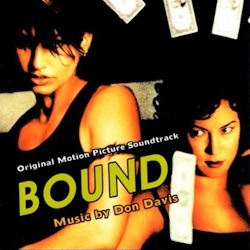
BOUND – Don Davis
 THROWBACK THIRTY
Original Review by Jonathan Broxton
Bound is a neo-noir crime thriller written and directed by Lana and Lilly Wachowski in what was their feature directing debut and, in retrospect, the first clear sign of the visual confidence that would explode three years later in The Matrix. Gina Gershon stars as Corky, an ex-con renovating an apartment next door to Violet (Jennifer Tilly), the glamorous girlfriend of volatile mob money-launderer Caesar (Joe Pantoliano). Corky and Violet begin an intense affair and devise a plan to steal $2 million in Mafia cash and run away together, framing Caesar in the process; naturally, almost nothing proceeds as intended, and the film turns confined spaces, shifting loyalties, sexuality, and escalating panic into a wonderfully controlled pressure cooker of a movie. Read more…
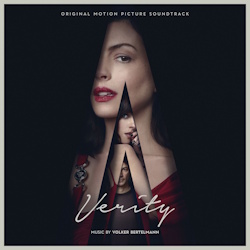
VERITY – Volker Bertelmann
 Original Review by Jonathan Broxton
Verity is a glossy, sinister psychological erotic thriller adapted from Colleen Hoover’s bestselling 2018 novel, directed by Michael Showalter from a screenplay by Nick Antosca. Dakota Johnson stars as Lowen Ashleigh, a struggling writer who is hired to complete the unfinished books of celebrated novelist Verity Crawford (Anne Hathaway) after a devastating accident leaves Verity incapacitated. Lowen relocates to the Crawford family’s isolated home, where she becomes increasingly entangled with Verity’s husband Jeremy (Josh Hartnett), while uncovering a manuscript that suggests the family’s tragedies may have much darker origins. Read more…
George Fenton, 1949-2026
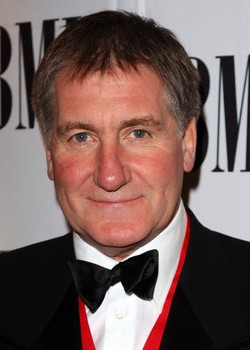 Composer George Fenton died unexpectedly in London on October 5, 2026, at the age of 76.
One of Britain’s most distinguished composers for film and television, Fenton enjoyed a career spanning more than five decades, earning five Academy Award nominations for Gandhi, Cry Freedom, Dangerous Liaisons and The Fisher King. He was equally celebrated for his spectacular music for David Attenborough’s natural-history documentaries, including The Blue Planet, Planet Earth, and Frozen Planet.
George Richard Ian Howe was born in Bromley, Kent, on October 19, 1949. His parents were both musical, although neither pursued music professionally, and he initially considered a career as an actor. In 1968 he appeared in Alan Bennett’s first West End Play, Forty Years On, alongside Sir John Gielgud, adopting his mother’s maiden name Fenton as a stage name because another performer was already registered with Equity under the name George Howe. Later he had a semi-regular recurring part on the soap opera Emmerdale Farm beginning in 1975.
Fenton’s early music career was rooted in the theatre. He began writing extensively for director Peter Gill and the Royal Shakespeare Company during the 1970s, while also composing for television. His early successes included The Jewel in the Crown, The Monocled Mutineer, Alan Bennett’s Talking Heads, and the theme tunes for popular TV shows such as Shoestring and Bergerac. He also wrote familiar themes for BBC news programmes and became one of the most versatile composers working in British television. Read more…
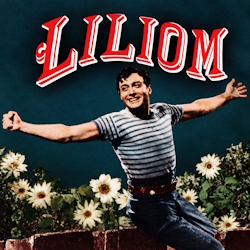
LILIOM – Franz Waxman, Jean Lenoir
 GREATEST SCORES OF THE TWENTIETH CENTURY
Original Review by Craig Lysy
The escalation in persecuting Jews, and Josef Goebbels banning his latest film “The Testament of Dr. Mabuse” elicited director Fritz Lang to flee Nazi Germany (he was half-Jewish) for Paris in 1933. He was warmly received by fellow émigré, producer Erich Pommer of Fox-Europa. Pommer was a legend of the German film industry who produced Lang’s film “Metropolis” (1927), and so he offered him to direct “Liliom”, a film that would adapt Ferenc Molnár’s 1909 stage play. Lang was renowned for his dark and futuristic epics, relished a departure to making a romantic fantasy and happily agreed. It would be the only French language film of his career, as he soon would depart for Hollywood. Pommer would personally manage production and Robert Liebmann and Bernard Zimmer would adapt the play, and write the screenplay. For the cast, Madeleine Ozeray would star as Juli/Her daughter with Liliom, Charles Boyer would join as Liliom, Pierre Alcover as Alfred, Maximillienne as Madame Menoux and Florelle as Madame Moscat. Read more…
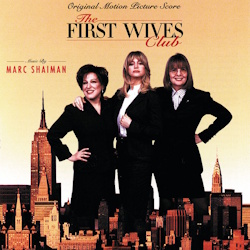
THE FIRST WIVES CLUB – Marc Shaiman
 THROWBACK THIRTY
Original Review by Jonathan Broxton
The First Wives Club is a comedy-drama film directed by Hugh Wilson, adapted by Robert Harling from Olivia Goldsmith’s bestselling novel. It stars Bette Midler, Goldie Hawn, and Diane Keaton as Brenda, Elise, and Annie, three college friends reunited by the death of a fourth member of their old circle, Cynthia. Each has reached middle age only to discover that the husband she helped support has left her, betrayed her, or traded her in for someone younger. Their grief and anger become a plan: expose the men’s hypocrisies, hit them where it hurts, and reclaim the confidence they have lost. The film has an astonishing supporting cast, including Stockard Channing and Maggie Smith, Dan Hedaya, Victor Garber, and Stephen Collins as the philandering husbands, and Sarah Jessica Parker and Elizabeth Berkley as two of the younger women the husbands leave their wives for, plus Marcia Gay Harden, Rob Reiner, a young Timothy Olyphant, and various real-life New York feminist icons and socialites playing themselves. Read more…
Under-the-Radar Round Up 2026, Part 3
 Original Reviews by Jonathan Broxton
I’m pleased to present the latest installment in my on-going series of articles looking at the best under-the-radar scores from around the world.
This article, the third of 2026, explores six more outstanding scores from recent months, including an Italian documentary celebrating 150 years of one of the country’s most important newspapers, a French comedic mystery inspired by the films of Alfred Hitchcock, a live-action western adventure based on the classic Lucky Luke comics, a gloriously retro French-Belgian parody of 1980s police thrillers, a Chinese historical documentary exploring a thousand years of Huizhou culture, and the latest entry in Spain’s outrageously irreverent Torrente comedy series. Read more…
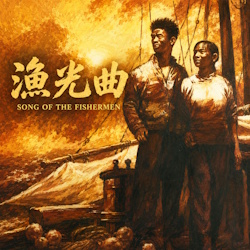
SONG OF THE FISHERMEN – Guang Ren
 GREATEST SCORES OF THE TWENTIETH CENTURY
Original Review by Craig Lysy
The impetus for making Song of the Fishermen was the desire of 1930s Chinese filmmakers to highlight the struggles of the working class and expose social inequality. Against a backdrop of profound national and economic crises, director Chusheng Cai aimed to create a realistic, emotional story that would awaken public sympathy as China faced severe economic depression, foreign imperialism, and natural disasters. Cai secured funding from the United Photoplay Service, the Lianhua Film Company, and its Second Studio in Shanghai. Lo Ming-yau managed production, while Cai directed and wrote the screenplay. Wang Renmei starred as Kitty, with Han Langen as Monkey, Tang Tianxiu as Xu Fu’s wife, Luo Peng as He Ziying, and Yuan Congmei as Liang Yuezhou. Read more…
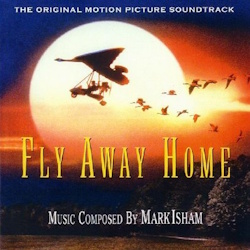
FLY AWAY HOME – Mark Isham
 THROWBACK THIRTY
Original Review by Jonathan Broxton
Fly Away Home is a family adventure-drama directed by Carroll Ballard, the filmmaker behind The Black Stallion and Never Cry Wolf, and photographed by his longtime collaborator Caleb Deschanel. The film stars Anna Paquin as Amy Alden, a thirteen-year-old girl who is sent to live with her estranged father Thomas, played by Jeff Daniels, in rural Ontario after her mother is killed in a car accident in New Zealand. Amy is withdrawn, angry, and emotionally stranded, but begins to heal when she rescues a clutch of goose eggs from land being cleared by developers. When the goslings hatch they imprint on her, and Amy becomes their surrogate mother. The problem is that, when autumn arrives, the birds have no adult geese to teach them their migration route, prompting Amy and Thomas to devise an extraordinary solution: they will lead the flock south in ultralight aircraft. Dana Delany co-stars as Thomas’s partner Susan, with Terry Kinney, Holter Graham, and Jeremy Ratchford in supporting roles. Read more…
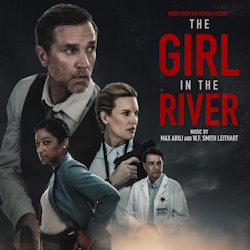
THE GIRL IN THE RIVER – Max Aruj, W.F. Smith Leithart
 Original Review by Jonathan Broxton
In the 1980s and 1990s there were a reasonably large number of mid-budget B-movie serial killer and crime thrillers released in cinemas in any given year, and many of them featured great scores by major composers. In recent years the genre has sort of dried up or, actually, moved to streamers like Netflix or Amazon, where they are now eight-episode miniseries as opposed to two-hour movies. That’s why The Girl in the River feels like something of a nostalgic throwback. The film stars Devon Sawa, Maggie Grace, Tiffany Haddish, and Ralph Macchio and concerns the abduction of twin teenage girls in a remote Mississippi community: one is found dead in the river, while the other remains missing, drawing veteran criminologist Alan Kramer and profiler Amelia Pembrock into an increasingly disturbing investigation. Read more…
GLI UOMINI, CHE MASCALZONI/WHAT SCOUNDRELS MEN ARE – Cesare Andrea Bixio
 GREATEST SCORES OF THE TWENTIETH CENTURY
Original Review by Craig Lysy
After the success of Italy’s first “talkie,” La Canzone dell’Amore, in 1930, the Italian film industry embraced the new format and blossomed. Director Mario Camerini aspired to be at the forefront of this emerging era of Italian cinema and transform it from one dominated by theatrical adaptations shot in reconstructed studio environments to one embracing outdoor filming in scenic, naturalistic locations across Milan and Lake Como. A marriage made in heaven followed when Cines studio executives decided to create a modern, populist romantic comedy while establishing a refreshing, realistic visual style by shooting on actual Milanese locations rather than artificial studio sets. The result was the film Gli Uomini, Che Mascalzoni, or What Scoundrels Men Are. A team of writers, including Camerini, Aldo De Benedetti, and Mario Soldati, wrote the screenplay; Cines managed production; and Camerini directed. Vittorio De Sica starred as Bruno, joined by Lia Franca as Mariuccia. Read more…
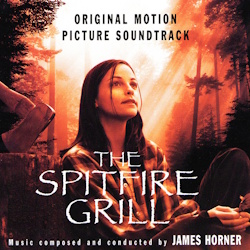
THE SPITFIRE GRILL – James Horner
 THROWBACK THIRTY
GREATEST SCORES OF THE TWENTIETH CENTURY
Original Review by Jonathan Broxton
The Spitfire Grill is a small-scale American drama film written and directed by Lee David Zlotoff, a television veteran best known as the creator of MacGyver and for his work on Remington Steele. The film marked Zlotoff’s feature directing debut and stars Alison Elliott as Percy Talbott, a young woman released from prison after serving time for manslaughter who decides to make a new start in the tiny town of Gilead, Maine. There she finds work at the Spitfire Grill, a weathered local diner owned by the formidable Hannah Ferguson, played by Ellen Burstyn. Percy gradually forms an especially important friendship with Hannah’s niece-by-marriage Shelby, played by Marcia Gay Harden, while Will Patton, Kieran Mulroney, and Gailard Sartain round out the principal cast. The story is essentially one of wounded people finding community and redemption: Percy’s arrival disturbs the town’s settled routines, but her energy eventually revives both the Grill and some of the people around it, even as secrets involving Hannah’s past and a mysterious figure living in the nearby woods begin to surface. Read more…

Shop at the Movie Music UK Store

Member of the


